
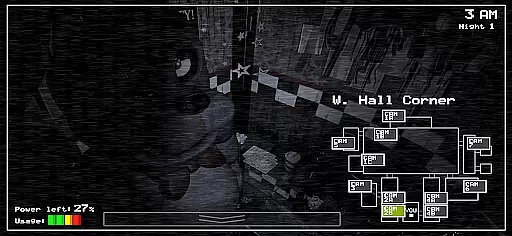
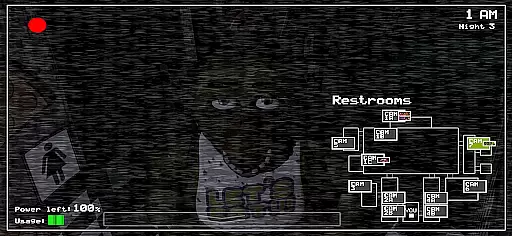
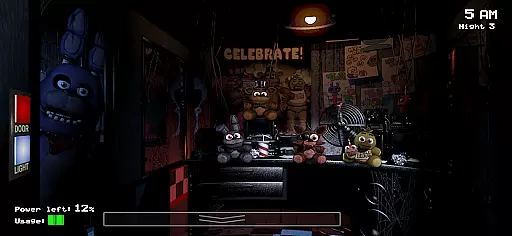

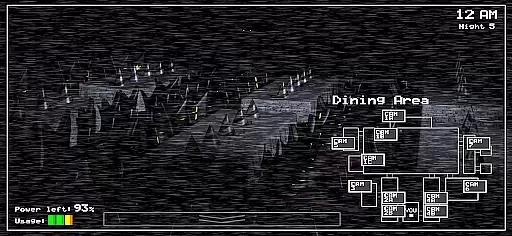
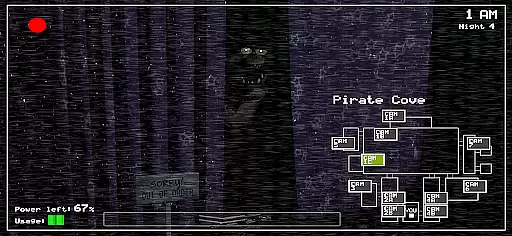
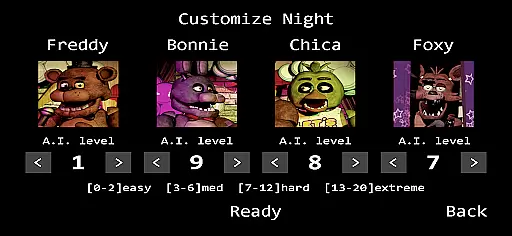
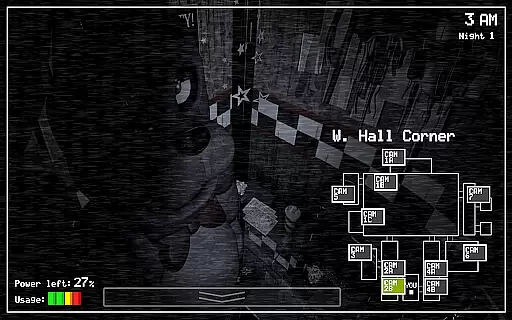
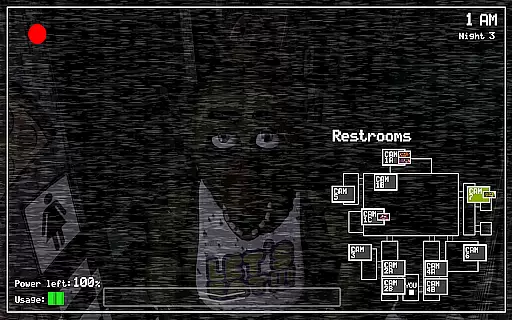
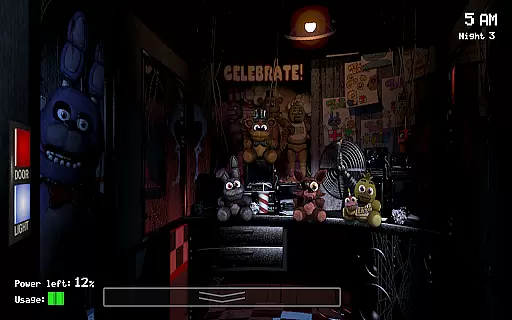

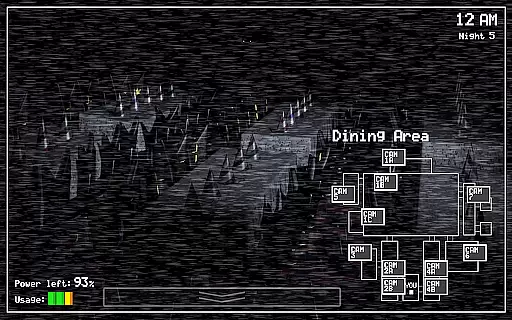
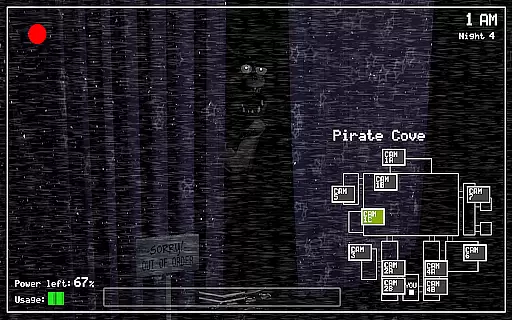
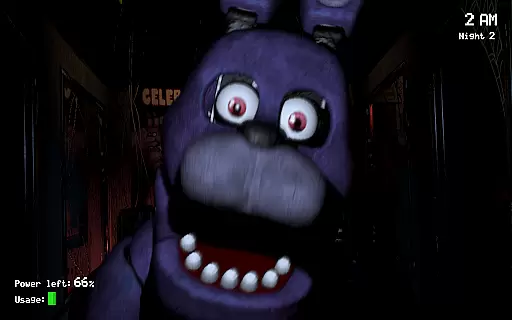
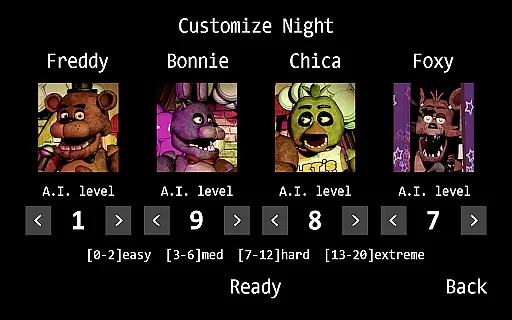
Five Nights at Freddy's is a popular action horror game that places you as a night security guard at Freddy Fazbear's Pizza. Your main task is to monitor the security cameras and ensure the animatronic robots stay in their designated areas. The gameplay creates suspense by limiting your power supply, forcing you to use resources wisely while checking camera feeds for any unusual activity.
The game stands out with its unique atmosphere, combining eerie animatronics with jump scares. As the nights progress, the difficulty increases, making it more challenging to survive until 6 AM. This remastered version features improved graphics and performance compared to the original PC release, offering an engaging experience for both new players and fans of the series.
One of the key features of Five Nights at Freddy's is its innovative gameplay mechanic where you must conserve limited power while monitoring multiple camera feeds. The game uses a simple point-and-click interface, allowing you to easily switch between cameras and secure doors. Each night presents different challenges as the animatronics become more aggressive and unpredictable.
The game also includes multiple language support, featuring English audio with subtitles available in various languages including French, German, Spanish, and Chinese. This makes the game accessible to a global audience. Additionally, the remastered version offers enhanced visuals and smoother performance on mobile devices, providing a more polished horror experience compared to its predecessors.
Control responsiveness and latency are crucial aspects of any action game, especially in horror games like Five Nights at Freddy's. These elements determine how quickly a player's input translates into in-game actions, directly affecting gameplay experience.
In this game, players must constantly monitor security cameras and manage limited resources like electricity to survive the night. The controls need to be highly responsive to allow swift navigation between camera feeds and efficient use of doors and lights. Any delay could mean the difference between survival and a terrifying encounter.
The developers have optimized the control scheme to ensure minimal input lag on devices with sufficient RAM. This optimization allows players to react instantly to threats, maintaining the intense atmosphere that has made the series famous. The quick response time enhances the feeling of tension and urgency.
Players benefit from this precise control system as it enables them to make split-second decisions during critical moments. Whether it's switching camera views or activating security measures, the responsive controls help maintain immersion and provide a satisfying challenge for those brave enough to face five nights at Freddy's.
While Five Nights at Freddy's doesn't feature traditional combat mechanics, the concept of combat feedback tightness is reimagined through its unique horror gameplay. In this context, combat feedback refers to how effectively the game communicates threats and player responses to create tension and fear.
The game employs various audio-visual cues to inform players about approaching dangers. From flickering lights indicating nearby animatronics to distinct audio signals warning of their proximity, every feedback mechanism is designed to keep players on edge. These elements work together to create an atmosphere of constant anticipation and dread.
Visual feedback is equally important, with detailed animations showing animatronic movements and attacks. When players interact with their environment by closing doors or using lights, the immediate visual response reinforces their sense of control in an otherwise helpless situation. This tight feedback loop maintains player engagement throughout each terrifying night.
The combination of responsive controls and effective feedback systems creates an immersive experience that has captivated horror game fans worldwide. By transforming traditional combat feedback concepts into innovative horror mechanics, Five Nights at Freddy's delivers a unique brand of terror that keeps players coming back for more, despite their fear.
Engaging horror atmosphere
Innovative gameplay mechanics
Multiple language options
Improved graphics in remastered version
Challenging difficulty progression
Short main campaign
Repetitive gameplay elements
Steep learning curve for beginners
Power management can feel frustrating
Limited replay value after completion

NEOGEO's masterpiece game is now available in the app!
 4.30
4.30
EIGHT open-source Quake 1-3 engines brought to your Android device!
4.70
Munch your way through 60 levels and over 140 objects!
4.40
Survive epic space battles in an offline roguelike bullet heaven adventure
4.60
Become a commander and infiltrate the Planet of Heroes!
4.60
Dive into Jurassic World in this dinosaur simulation game
4.30
Shooting Defense Game! Defend the dungeon from the heroes!
4.80
Defend the last base and protect humans against alien monsters !
4.40
Just a nice, normal game
4.20
Defeat the nasty aliens!
5.00
Brotato: The Ultimate Bullet Hell Experience!
4.80
The Ultimate AAA Shooter: Mobile Warfare Redefined.
4.60
Online & offline multiplayer FPS shooting game. Play PvP live with your friends!
4.60
This time, the terror has followed you home!
4.60
Die Again - Troll Game Ever A fantastic, goofy, crazy and always makes you laugh
4.50
ANSWER THE SNIPER CALL
4.10
Secret of Mana—the landmark action RPG first released for SNES in 1993!
3.60
Play through 45 action-packed missions with over 90 iconic Marvel characters!
3.00
Retro pixel war game! Destroy enemies and survive the chaos!
4.5


User Reviews