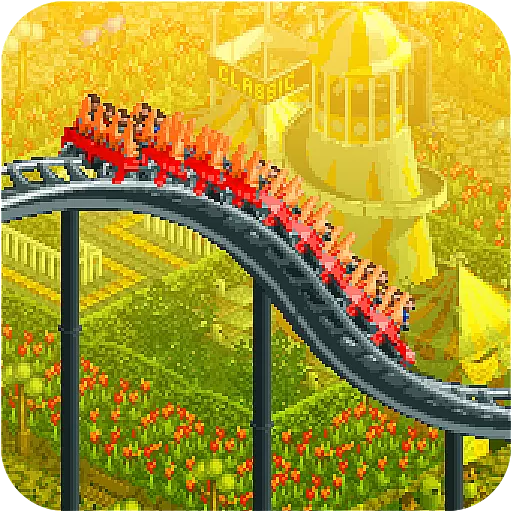
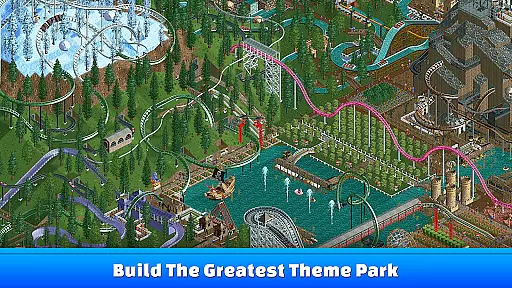
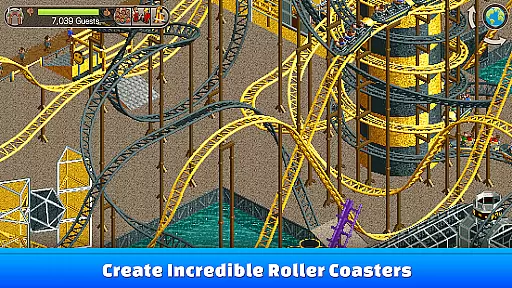
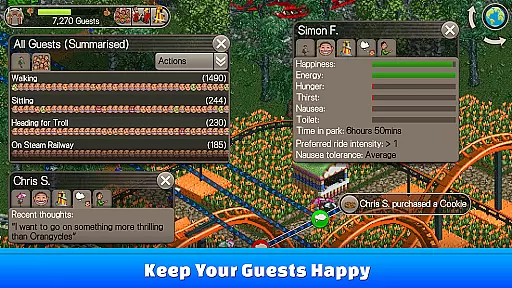
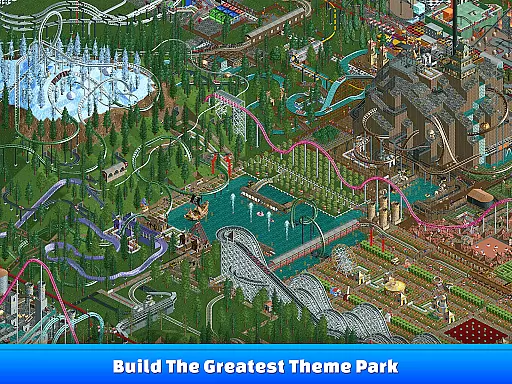
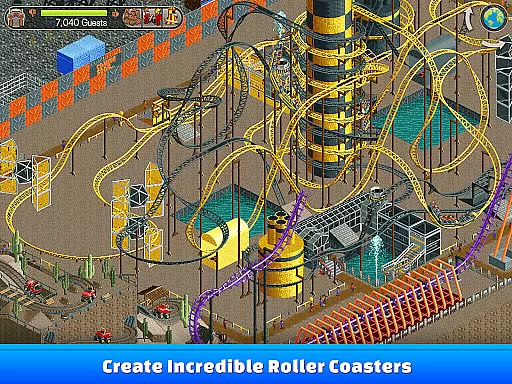
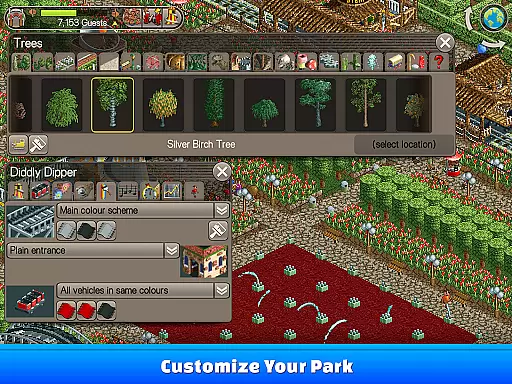
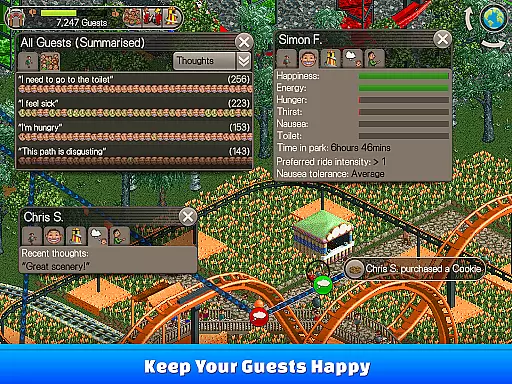
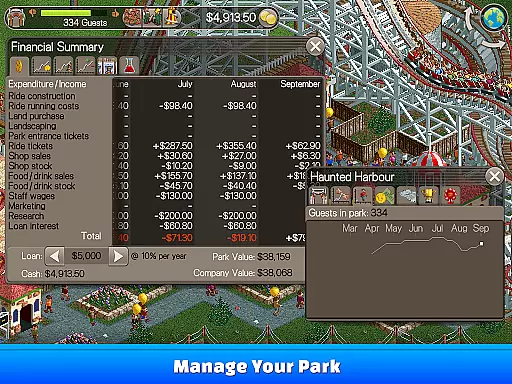
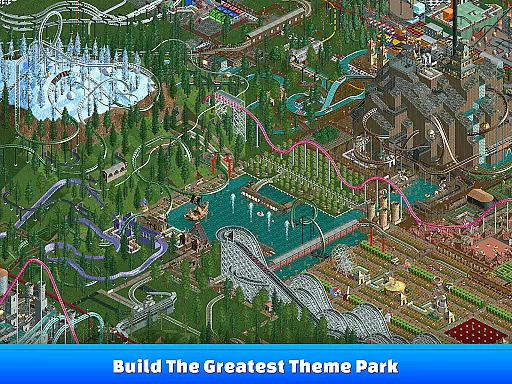
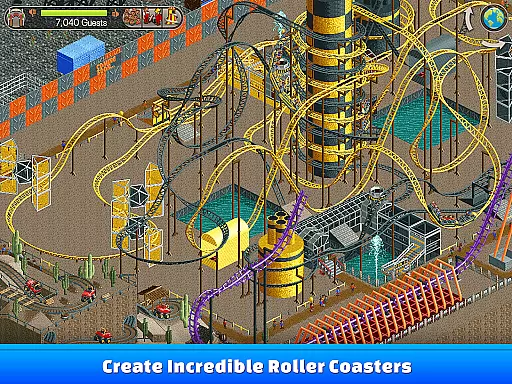
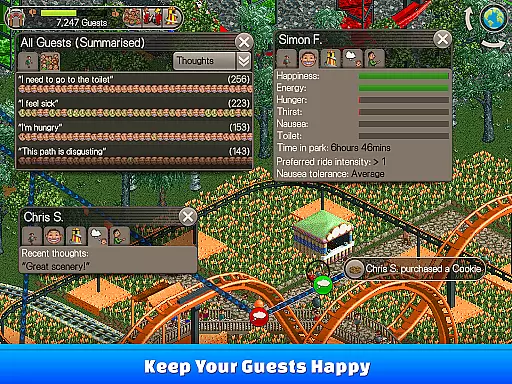
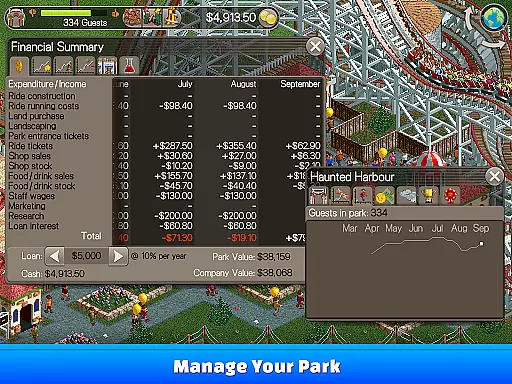
RollerCoaster Tycoon® Classic delivers an engaging simulation experience by combining the best elements from RollerCoaster Tycoon® and RollerCoaster Tycoon® 2. This app allows players to design, build, and manage their own amusement parks with a wide variety of rides and attractions. The game challenges users to create incredible roller coasters piece-by-piece or choose from pre-made designs while managing park finances and guest satisfaction.
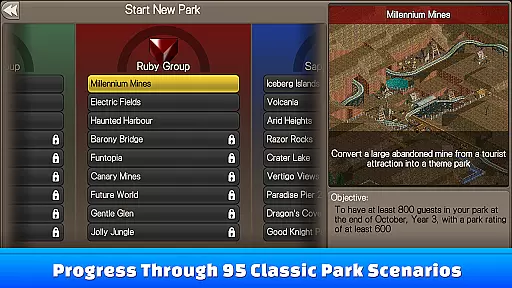
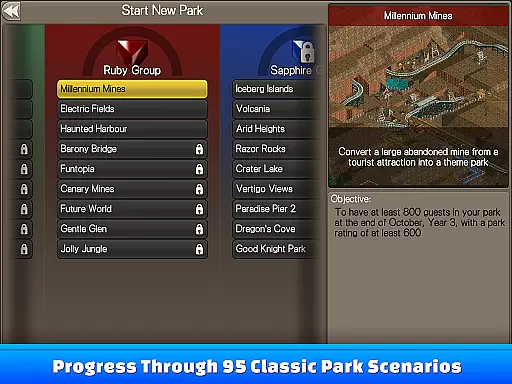
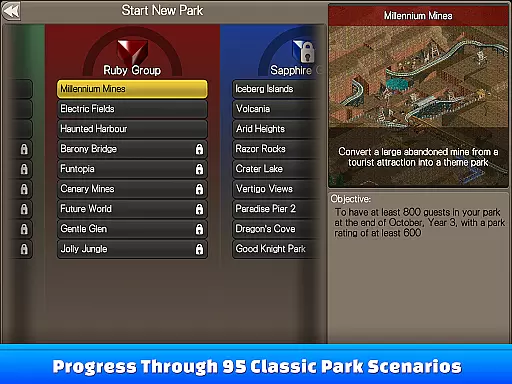
The app features authentic isometric graphics and original music that capture the charm of the classic PC games. With 95 park scenarios ranging from Forest Frontiers to Megaworld Park, players can enjoy diverse environments and challenging situations. Additional content like Wacky Worlds and Time Twister expansion packs offer more scenarios and unique themes, enhancing the overall gameplay experience.
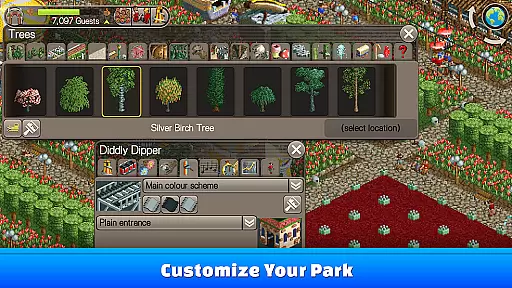
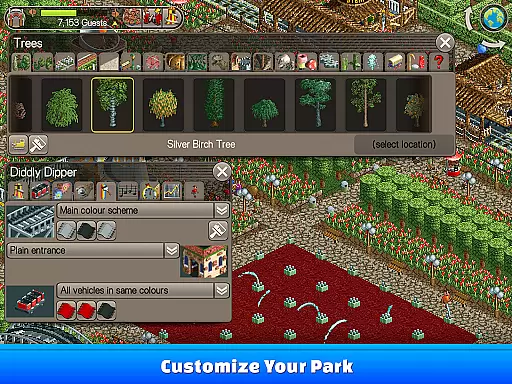
RollerCoaster Tycoon® Classic offers rich features that cater to both casual gamers and hardcore simulation enthusiasts. One standout feature is the coaster construction tool, which provides intuitive building options for creating custom rides. Players can also design their parks down to the smallest detail, including landscaping and footpath routing, ensuring a personalized touch to each park.
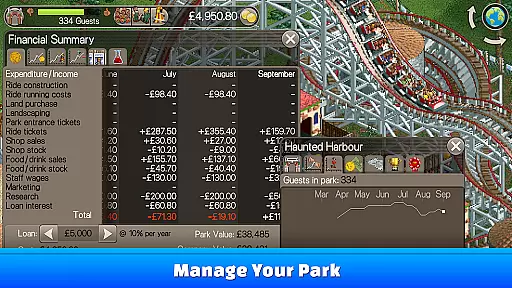
Park management is another key aspect, where players must balance marketing strategies, staff organization, and financial planning to maintain a profitable park. The inclusion of expansion packs such as Wacky Worlds and Time Twister adds new dimensions with exotic rides and time-themed scenarios. Furthermore, the Toolkit expansion offers creative freedom through the Park Scenario Editor and Ride Designer, allowing users to share their creations with a community of like-minded players.
RollerCoaster Tycoonu00ae Classic offers a rich economic system that mirrors the intricacies of real-world park management. The game integrates financial planning, marketing strategies, and guest satisfaction into its core mechanics. Players must strategically price tickets, manage ride maintenance costs, and invest in park amenities to maintain a steady cash flow.
The dynamic feedback system is particularly noteworthy. As players make decisions, they receive immediate responses from the park environment. For instance, raising ticket prices might reduce guest numbers, while neglecting ride maintenance could lead to costly breakdowns. These cause-and-effect relationships create an engaging learning experience for players.
What sets this simulation apart is how it teaches valuable business skills through gameplay. Users learn to balance short-term expenses with long-term investments, understanding how each decision impacts their park's overall profitability. This depth makes the game not just entertaining but also educational for those interested in economics or business management.
Resource management in RollerCoaster Tycoonu00ae Classic requires careful consideration of multiple variables. Players must allocate their budget across various aspects including ride construction, staff salaries, and park maintenance. The game challenges users to find optimal solutions that maximize guest satisfaction while maintaining operational efficiency.
A key feature is the sophisticated staff management system. Players can hire handymen to clean paths, mechanics to fix rides, security guards to prevent vandalism, and entertainers to keep guests happy. Each staff type has different salary requirements and work efficiency ratings, forcing players to make strategic hiring decisions based on their park's specific needs.
The game excels in creating meaningful trade-offs between different resources. For example, investing heavily in ride maintenance might improve safety ratings but could limit funds available for new attractions. This balancing act keeps players engaged as they constantly adjust their strategies to adapt to changing park conditions and visitor demands.
Engaging gameplay
Variety of scenarios
Customizable parks
Classic graphics style
Active community support
In-app purchases needed
Steep learning curve
Outdated graphics
Limited social features
Occasional bugs

Play on ANY CITY in the world!
 3.70
3.70
An Atmospheric Vehicle Adventure Game
4.60
Merge chips, craft upgrades, and power up your microcircuit to earn more!
4.30
Solve the mysteries of the universe with potato power!
4.40
Explore the open world and run your business empire in this real life simulator!
4.50
Explore Mimo Land – where you can shop, decorate your home, relax at the spa!
3.70
7 years packed with fun
4.20
Cause chaos as a mischievous kitty in this hilarious cat simulator!
4.50
Prove your hunting sniper skills in ultimate 1v1 duels. Become a shooting master
4.60
Enter a world of magic and adventure and create your own RPG-style town!
4.80
Smash solar systems, orbit planets, and destroy in this universe simulation game
4.70
Lead a Magical School and Cast Spells in an Incremental Game!
4.70
Start painting, match paint, merge colors and get creative in this coloring game
4.60
Pro Wrestling Team Management Sim, Face off with fearsome foes!
4.50
From humble backwater to medieval metropolis - build the city of your dreams!
4.50
Change lives in Flop House: Become the idle manager of a homeless shelter!
4.50
Build your kingdom in this atmospheric micro strategy game.
4.20
A babysitting horror game
4.20
Be the leader of wobblers from ancient lands, spooky places, and fantasy worlds.
4.10


User Reviews