
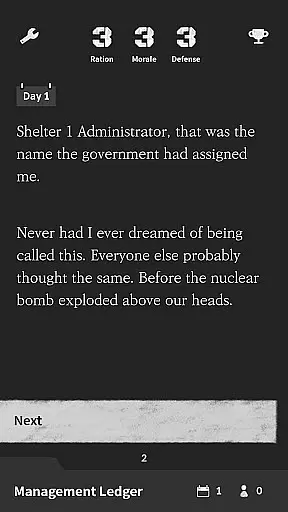
SEOUL 2033: Shelter is a simulation game set in a post-apocalyptic Seoul following a nuclear disaster. As the administrator of Shelter 1, your primary responsibility is managing the shelter's resources and population to ensure survival. The game challenges players with continuous decision-making, where each choice directly impacts the future of the shelter and its inhabitants.
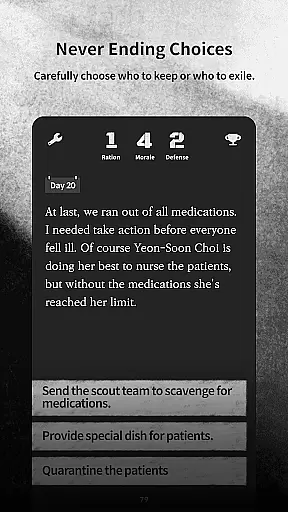
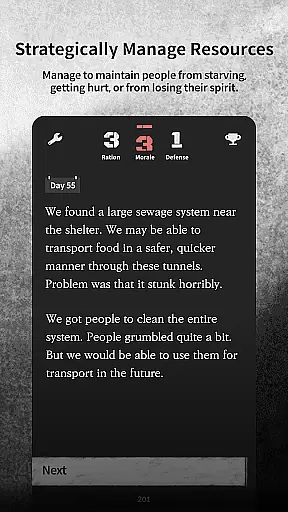
The gameplay revolves around three key resources: Ration, Defense, and Mentality. Players must strategically allocate these resources to prevent starvation, injuries, and loss of morale among the shelter's residents. With over 300 unique storylines and 25 diverse characters, the narrative evolves based on your decisions, offering a dynamic and immersive experience that reveals the past lives of familiar characters from the SEOUL 2033 universe.
SEOUL 2033: Shelter offers rich features that create an engaging simulation experience. One standout aspect is the game's focus on meaningful choices. As the shelter administrator, every decision you make - from choosing who stays or leaves to allocating limited resources - shapes the storyline and determines the fate of your community.
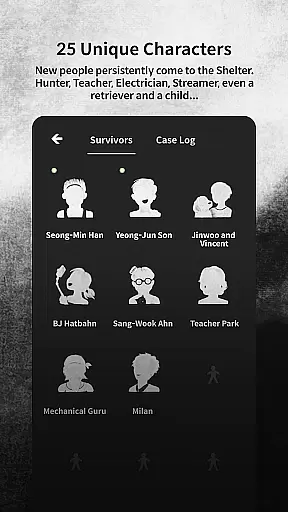
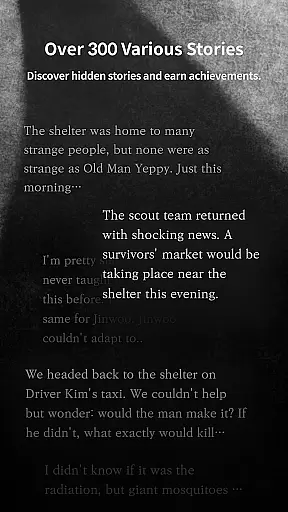
The game also boasts 25 unique characters, each with their own background stories, adding depth to the gameplay. From Hunters to Teachers, these characters bring different skills and challenges to the shelter. Additionally, with over 300 varied stories, the game ensures high replayability as new scenarios unfold with each playthrough. The prequel setting allows players to explore the backstories of beloved characters from SEOUL 2033, enhanced by professional voice-over narration that brings the post-apocalyptic world to life.
In 'SEOUL 2033 : Shelter', the economic system is designed to reflect the harsh realities of a post-nuclear world. As the Shelter Administrator, your decisions directly impact resource allocation and survival chances.
The game features a complex rationing system where you must carefully balance food, medical supplies, and other essential resources. Each choice creates ripple effects throughout the shelter's ecosystem, influencing character morale and overall sustainability.
This dynamic feedback mechanism ensures that every decision carries weight and consequence. Players must consider both immediate needs and long-term implications, making strategic choices about who receives resources and when.
Through this intricate economic system, players experience the true challenges of leadership in crisis management, learning how small choices can dramatically affect their community's future.
Resource management in 'SEOUL 2033 : Shelter' requires careful balancing of three crucial elements: Ration, Defense, and Mentality. These interconnected systems demand strategic thinking and adaptability from players.
The game presents various scenarios where players must decide between investing resources in defense upgrades or maintaining adequate food supplies. Each decision impacts the shelter's stability differently, creating unique challenges with every playthrough.
With over 300 story variations, the resource management system remains fresh and engaging. Players encounter diverse situations that test their ability to maintain equilibrium while facing unexpected events and new arrivals.
This balanced approach to resource management creates an immersive experience where no two shelters develop identically, encouraging multiple playthroughs to master different strategies for survival.
Engaging storyline
Strategic resource management
Diverse character backgrounds
High replay value
Professional voice acting
Steep learning curve
Occasional bugs
Resource scarcity
Complex mechanics
Limited beginner guidance

Advanced 3d bow simulator app for hunters, using real archery ballistics.
 4.50
4.50
Drive trucks along challenging routes inspired by Bolivia
4.20
Build your zoo, collect and take care of animals and make your guests happy!
4.1
Start painting, match paint, merge colors and get creative in this coloring game
4.60
Rediscover your engineering creativity in this bridge building masterpiece.
4.10
A babysitting horror game
4.20
Step into the world of tycoon simulator games and seal profitable business deals
4.10
Farming games: Harvest crops and Grow your own farm
4.60
The original idle game. Bake cookies to rule the universe!
4.50
Help your child, in a story-driven nurture game based on true events
4.80
An Atmospheric Vehicle Adventure Game
4.60
Life Business empire rich game. Boss millionaire idle games. Idle office tycoon
4.60
The Ultimate Cosmic Destruction Simulator
4.60
Merge chips, craft upgrades, and power up your microcircuit to earn more!
4.30
Build a cult empire and become a tycoon in the addictive idle cultist simulator
4.30
It’s not a bug, it’s a feature
4.20
Make yummy Jelly and start your Mukbang livestream
4.20
Manage your own supermarket. Order products and expand your store simulator game
3.90
Create incredible parks in the original rollercoaster sim enhanced for mobile.
3.80


User Reviews