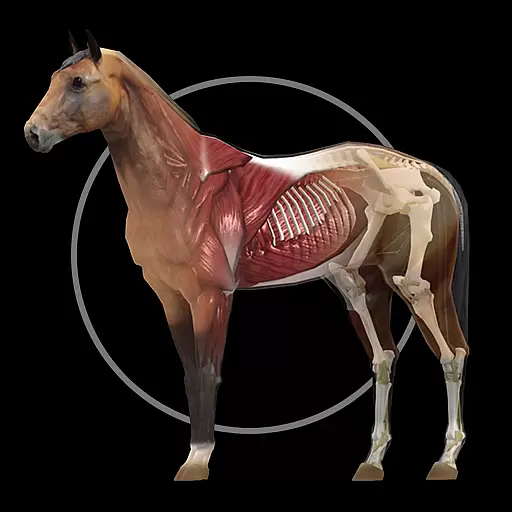
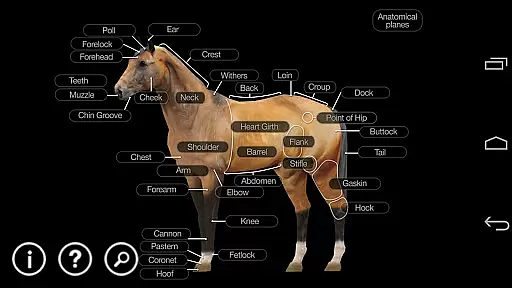
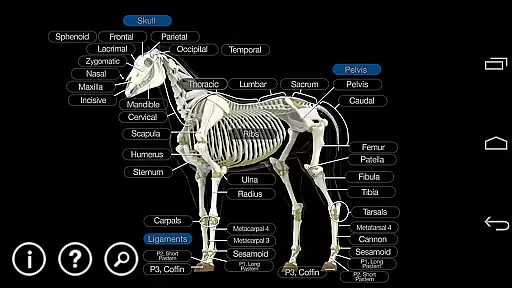
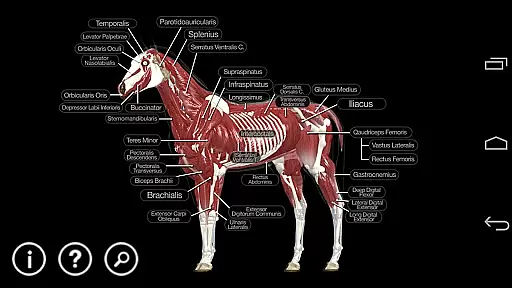
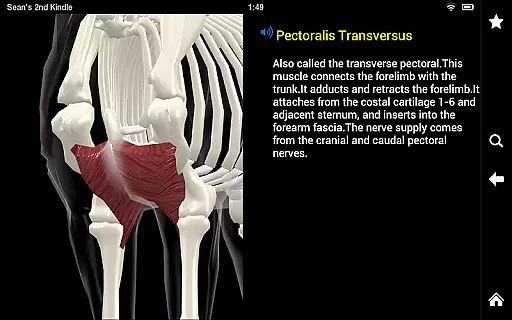
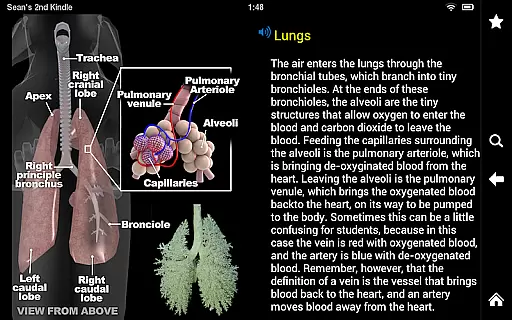
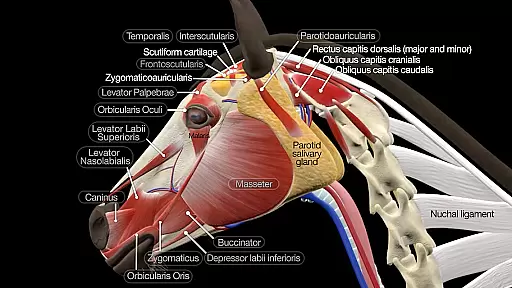
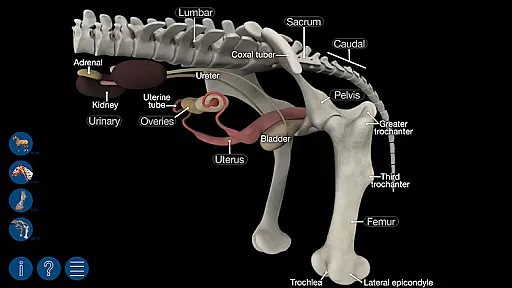
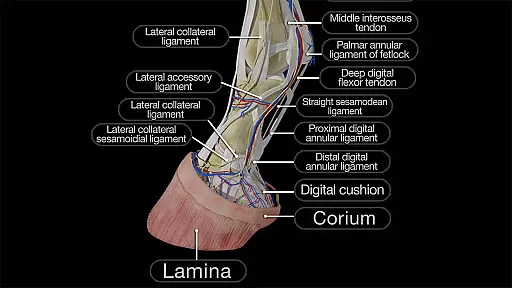
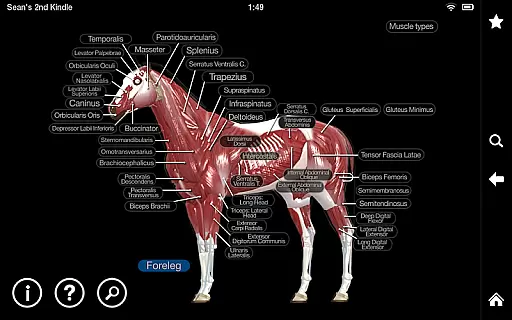
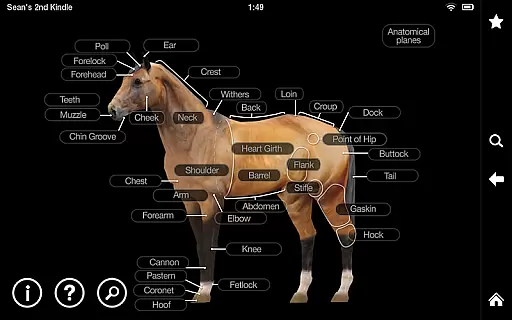
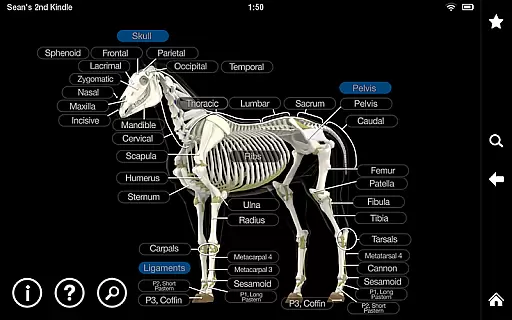
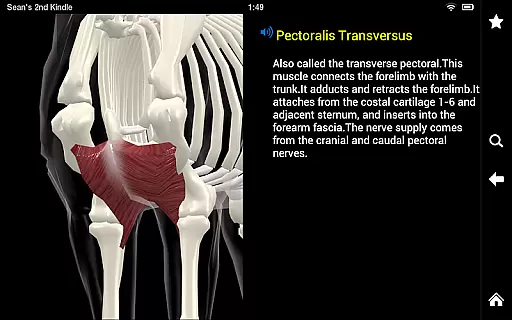
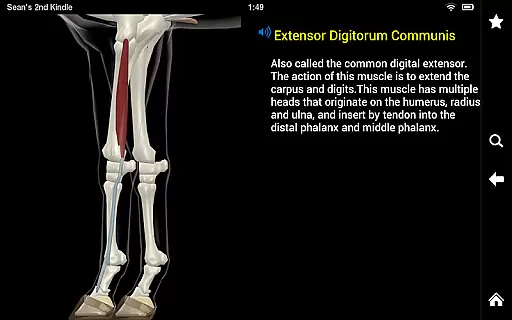
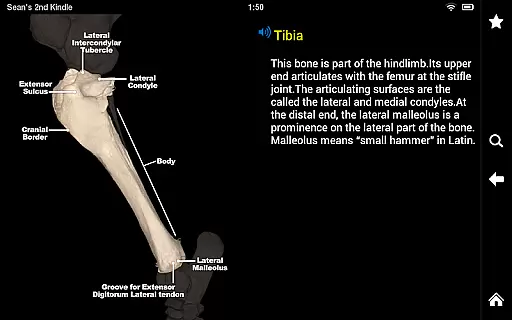
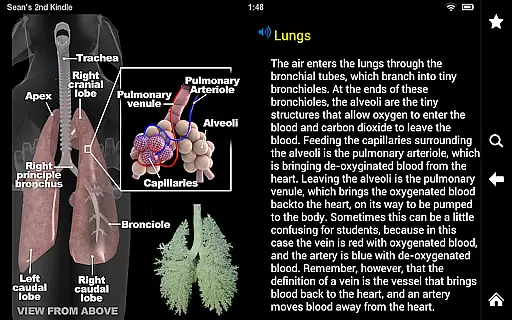
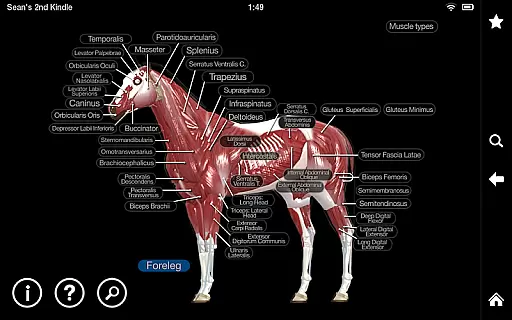
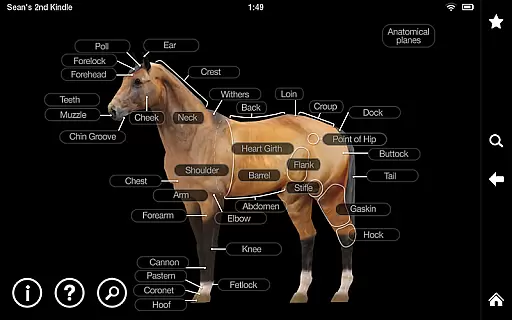
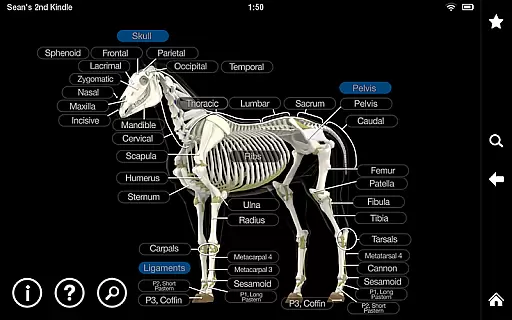
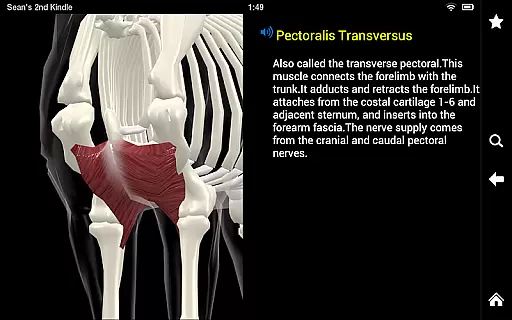
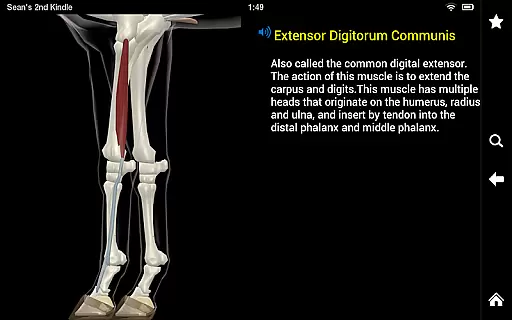
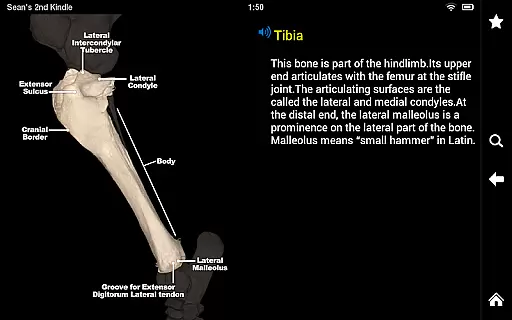
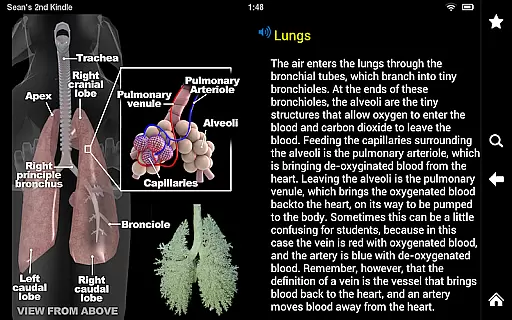
Horse Anatomy is a comprehensive 3D anatomy app designed for medical professionals, veterinary students, and equine enthusiasts. The application provides an in-depth exploration of the horse's anatomy through interactive 3D models that can be rotated, zoomed, and dissected layer by layer. Each anatomical structure is clearly labeled with detailed descriptions, audio pronunciations, and close-up views to enhance understanding.
The app covers all major anatomical systems including superficial landmarks, muscles, bones, organs, and specialized structures like the hoof, head, and reproductive system. Its unique quiz function allows users to test their knowledge on over 300 anatomical structures, offering customizable quizzes based on individual learning needs. Whether you're studying equine anatomy or seeking a reliable reference tool, Horse Anatomy delivers both educational value and practical utility.
Horse Anatomy stands out with its advanced 3D visualization technology, enabling users to explore every aspect of equine anatomy in detail. The app features high-resolution 3D models that allow precise interaction—rotate the model 360 degrees, zoom into specific areas, or peel back layers to reveal deeper structures. This hands-on approach helps users better understand spatial relationships between different anatomical components.
In addition to its visual capabilities, the app includes an extensive quiz feature covering more than 300 anatomical structures. Users can take section-specific quizzes, create personalized tests, or focus on areas where they need improvement. Audio pronunciations and commentaries further enrich the learning experience, making it accessible even for beginners. With regular updates and new 3D models added frequently, Horse Anatomy remains a cutting-edge tool for anyone interested in veterinary science.
When it comes to medical education, the accuracy and reliability of information are paramount. The Horse Anatomy app ensures medical content credibility by providing clearly labeled anatomical structures verified by equine anatomy experts.
Each 3D model within the app is developed based on thorough research and validation from veterinary professionals, ensuring that users receive authoritative knowledge about horse anatomy. This includes detailed models of superficial landmarks, muscles, bones, and organs.
The inclusion of expert-reviewed commentary and audio pronunciation further enhances the authenticity of the educational experience. Users can trust that the information they are learning is both accurate and comprehensive.
Additionally, the quiz function covering over 300 structures allows for self-assessment and reinforces learning through interactive engagement with expert-vetted content.
While the Horse Anatomy app does not provide direct teleconsultation services, it significantly enhances the quality of remote consultations between veterinarians and horse owners. By offering a deep understanding of equine anatomy, users can better communicate symptoms and issues during virtual appointments.
The app's detailed 3D models allow users to explore various anatomical sections such as the hoof, head, and reproductive systems in-depth. This empowers horse owners to discuss specific areas of concern with veterinary professionals accurately.
Moreover, features like creating custom quizzes or focusing on missed questions help users gain a comprehensive understanding of equine anatomy. This preparation leads to more productive teleconsultations where both parties have a shared knowledge base.
Ultimately, while not a telemedicine platform itself, Horse Anatomy indirectly elevates teleconsultation quality by educating its users thoroughly in equine anatomy.
User-friendly interface
Highly detailed 3D models
Comprehensive quiz options
Audio pronunciation support
Regular content updates
Requires significant storage space
Premium subscription needed
Limited free content
Occasional performance lags
No offline mode available

A scientifically-proven method to help people with dementia or memory impairment
 4.5
4.5
Adaptive-learning flashcards and quizzes for the Top 250 Drugs
4.60
Download the PulsePoint app and use your CPR skills to save a life!
4.60
The Omada app enhances your program experience and helps you stay engaged.
4.50
Control your hearing aids discreetly with the touch of a finger
4.30
Medication reminder, Medicine list, Trackers for BP, glucose, weight, water, etc
4.70
Use the phone microphone or headset mic as sound amplifier for louder hearing.
4.30
Good for You. Great for Life.
4.00
This app is simply 1 book (also large app) and 17 other apps combined into 1
4.70
A comprehensive medical disease app.
5.00
myVCA is your tailor-made guide to raising a healthy and happy pet.
4.90
Elegant, easy-to-use period tracker for fertility, PMS symptoms, and more
4.90
Donating blood and platelets is easier than ever with The American Red Cross.
4.80
Manage your prescriptions anytime, anywhere with the Publix Pharmacy mobile app.
4.80
Manage your healthcare through the FollowMyHealth® Universal Health Record.
4.80
Want to make it easier to manage your health? We’re with you, wherever you are.
4.70
The MDLIVE app makes connecting with a doctor fast, easy, and convenient.
4.60
We’ve made it easy for Oscar members to get care on the go.
4.30
One app to unlock your health
4.30


User Reviews