
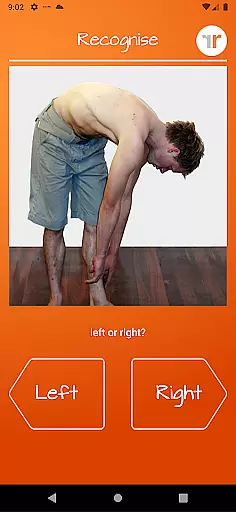
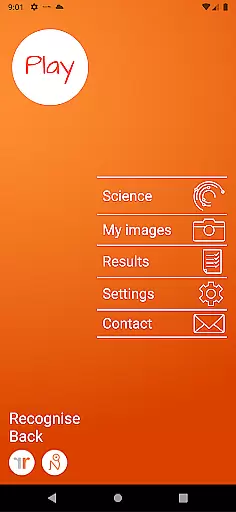
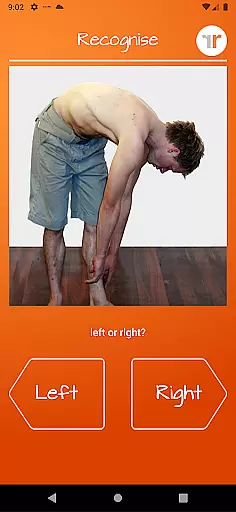
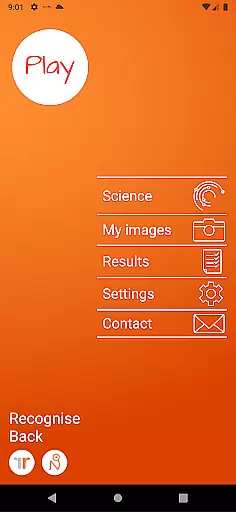
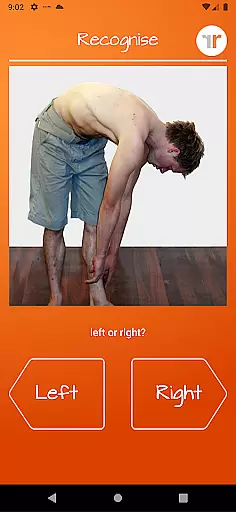
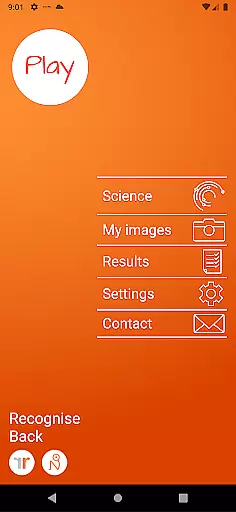
Recognise Back is a specialized health and fitness application designed to assist users in managing pain, enhancing performance, and supporting rehabilitation through a structured Graded Motor Imagery (GMI) program. The app focuses on improving the user's ability to discriminate between left and right body images, which is crucial for retraining the brain in various pain and injury states.
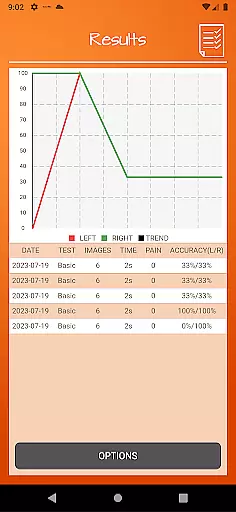
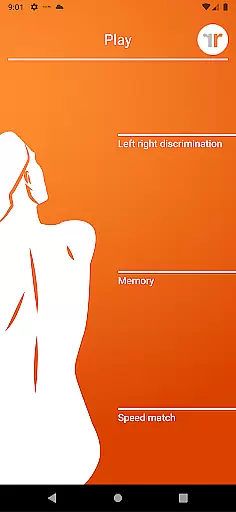
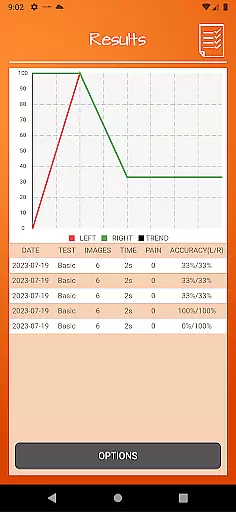
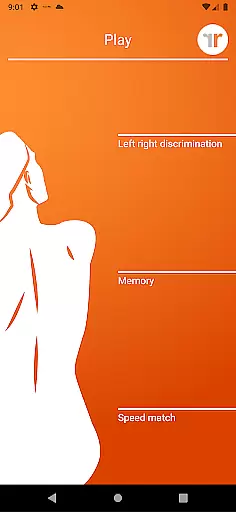
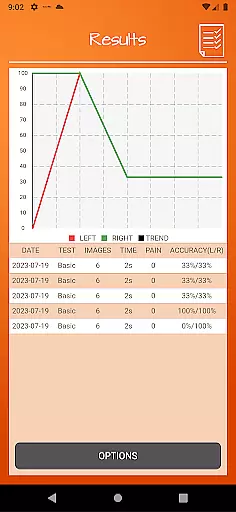
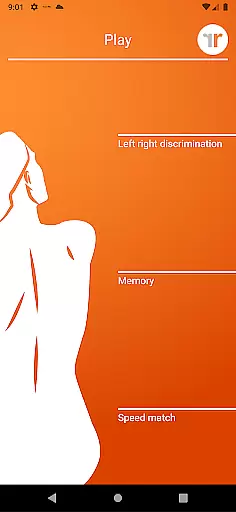
The application offers two main modes of engagement - TEST and TRAIN. In TEST mode, users can assess their proficiency in recognizing body areas as either left or right. TRAIN mode allows users to leverage the brain's neuroplasticity with advanced tools like 'Memory' and 'Speed match', graded difficulty levels, and personal best challenges. Recognise Back also provides detailed progress tracking through onscreen results and graphs, making it an essential tool for both patients and clinicians.
This app is particularly beneficial for individuals undergoing physical rehabilitation or those interested in optimizing their motor imagery skills. By integrating clinical tools that allow exporting and emailing results directly to healthcare providers, Recognise Back bridges the gap between self-training and professional care, offering a comprehensive approach to recovery and performance enhancement.
Recognise Back stands out with its unique approach to motor imagery training by incorporating scientifically-backed methods into an accessible mobile application. One of the key features is the ability to test and train the brain's left/right discrimination skills, which are vital for recovery from complex pain and injury conditions. The app includes engaging tools such as 'Memory' and 'Speed match' that elevate the training experience to new levels.
Users can benefit from personalized training experiences thanks to the app's graded difficulty levels and personal best challenges. Progress is made visible through detailed onscreen results and graphs, allowing users to map their improvement over time. Additionally, Recognise Back offers powerful clinical integration features, enabling users to export and email their results directly to their clinician or therapist for further analysis.
A distinctive feature of Recognise Back is the ability to capture custom images on the device and incorporate them into training sessions. This customization enhances the relevance and effectiveness of the exercises. With a comprehensive explanation of the science behind Left/Right Discrimination and Graded Motor Imagery included, users gain a deeper understanding of the methodology, ensuring informed and motivated participation in their rehabilitation journey.
Recognise Back offers a personalized approach to pain management and rehabilitation through its specialized training tools. The app's 'Left/Right Discrimination' feature tests your ability to quickly identify images of body areas, creating a baseline for customized training programs.
The Graded Motor Imagery program provides a structured framework that adapts to individual progress. With graded difficulty levels and personal best challenges, users can advance at their own pace, ensuring the training remains relevant and effective for their specific needs.
By capturing your own images and incorporating them into training sessions, the app allows for a highly tailored experience. This level of personalization ensures that each user's unique rehabilitation requirements are met with precision and adaptability.
Tracking progress is crucial in any rehabilitation program, and Recognise Back excels in visualizing user advancement. The app provides detailed onscreen results and graphs that map your journey through the training modules, making it easy to monitor improvements over time.
Clinical integration features enhance this visualization by allowing users to export and email their results directly to healthcare providers. This creates a transparent feedback loop between patients and clinicians, enabling more informed decision-making regarding treatment plans.
The comprehensive performance metrics not only demonstrate measurable progress but also serve as motivational tools. Seeing tangible evidence of improvement helps maintain user engagement and commitment to the rehabilitation process.
Scientifically validated
Engaging training tools
Detailed progress tracking
Clinical integration
Custom image capture
Paid application
Complex for beginners
Limited to motor imagery
Requires consistent use
Dependent on external guidance
Your plan in your pocket 24/7
 3.00
3.00
Home workouts for fitness & fast bodybuilding at home - no equipment needed.
4.90
Create powerful subliminal audio with custom affirmations and background music.
4.00
Using Recognise™ has been shown to reduce pain and improve performance.
4.1
Mind on steroids - relaxation, productivity, meditation and sleep!
4.60
Turn your steps into cash, gift cards & rewards with our step counting pedometer
3.80
Grow with self-tests and personal routine.
4.30
Memory, mind & logic exercises. Puzzle games, IQ & brain test for kids & adults
4.50
Easy to use step counter, calorie counter helps lose weight, count steps offline
4.80
Walk. Earn: Get rewarded for every step! Walk, move, and earn real rewards.
4.70
Step Counter, track steps when you walk or run
4.70
Effortlessly and naturally release anxiety by harnessing the power of your brain
4.60
Relax. Sleep Better. Feel Better.
4.50
Relax to calm sounds, white noise, music, guided meditation and bedtime stories
4.40
The most accurate heart rate app to monitor and track your heart rate & pulse.
4.40
Track sleep cycle, relax with white noise, sleep sounds & smart alarm clock
3.80
Focus on BP & Health
3.80
FitCloudPro takes care of your health every minute.
3.70
Using Recognise™ has been shown to reduce pain and improve performance
4.1


User Reviews